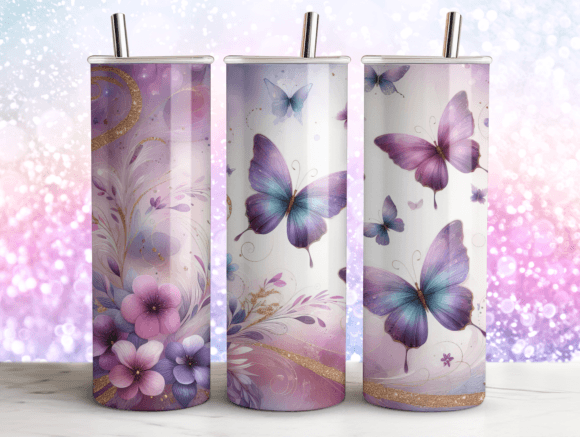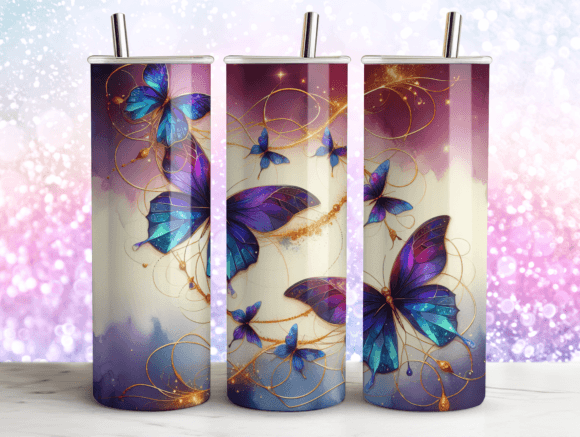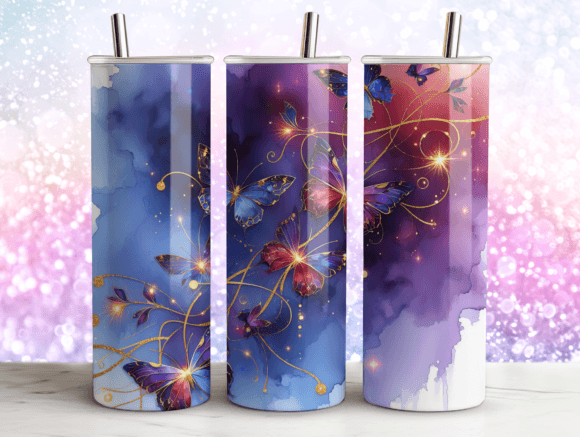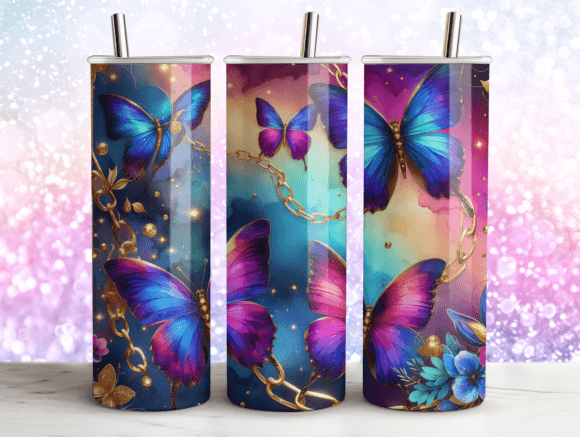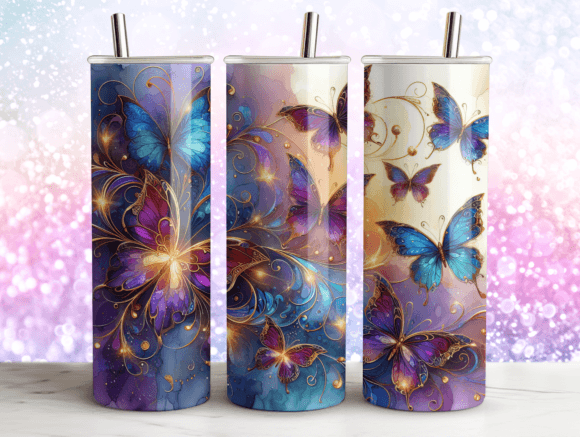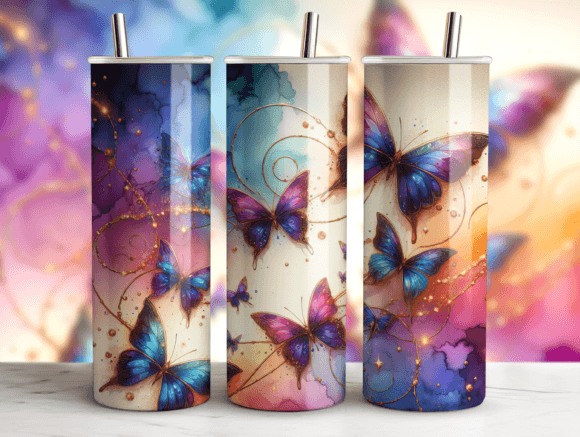
Agate Glitter Butterflies Tumbler Wrap
Let’s be real: I opened this file expecting another AI-generated butterfly motif—pretty, but forgettable. Instead, Agate Glitter Butterflies Tumbler Wrap landed with quiet confidence. It’s not shouting for attention; it’s catching light like a sunlit geode. As an embroidery designer who’s stitched over 200 custom orders—from baby onesies to boutique aprons—I immediately saw how this design would translate beyond the screen: delicate wings shimmering in satin stitch, subtle glitter texture implied through layered fill and soft edge gradation, and that agate-inspired color flow (rose quartz to smoky amethyst) that reads *hand-selected*, not algorithm-picked.
First Impressions That Hold Up Under Needle & Thread
The layout is smartly scaled for vertical wrap use—but don’t let “tumbler wrap” limit your thinking. I tested it as a centered chest motif on a heavyweight organic cotton tote bag, and it balanced beautifully: wings gently arcing outward, body anchoring the composition without stiffness. There’s no cluttered center or fussy symmetry—just organic asymmetry that feels alive. That matters when you’re stitching on uneven fabric grain or curved seams. The butterflies aren’t identical twins; they’re siblings—slight variations in wing tilt and size create rhythm, not repetition. That subtlety translates directly to embroidery: less risk of robotic uniformity, more handmade warmth.
Where It Shines (and Where It Asks for Care)
This isn’t a one-size-fits-all embroidery file—and that’s its strength. Agate Glitter Butterflies Tumbler Wrap excels on stable, medium-weight fabrics where stitch definition can breathe: canvas tote bags, twill aprons, brushed cotton pillow covers, and midweight sweatshirts. On a recent client project—a set of embroidered kitchen towels for a small ceramicist’s holiday shop—the design held its delicacy even after three rounds of hot-water washing. The satin-stitched wing edges stayed crisp; the fill-stitch agate bands retained dimension without puckering.
But here’s what I’d tell any Etsy seller or craft business owner before hitting “print”: test it on scrap first. Especially if you’re planning to use it on stretchy knits, thin rayon blends, or dark fabric. The glitter effect relies on tonal layering—not reflective thread—so on black or navy, you’ll need high-contrast thread colors (think silver-gray or pearlescent white) to preserve luminosity. And while the design avoids micro-detail (no 0.5mm antennae or hair-thin veins), those wing tips taper finely—so avoid dense stabilizer stacks on lightweight fabrics, or you’ll mute the softness.
Real Project Moment: A Nursery Pillow Cover That Felt Like a Keepsake
Last month, I stitched Agate Glitter Butterflies Tumbler Wrap onto a 16” linen-cotton blend pillow cover for a client’s newborn nursery. She wanted “whimsical but not cutesy”—no cartoon bugs, no glitter glue. This delivered. The satin stitches caught morning light like dew, and the agate palette softened the whole space. What surprised me? How well it read at 8 inches away. Many AI-enhanced graphics collapse into mush when scaled down—but this held clarity because the core shapes were built for stitch logic, not just pixels. No running stitch outlines were needed; the fill and satin transitions created natural separation. That’s rare.
What It Does for Your Craft Business (Beyond Pretty)
As someone who reviews hundreds of digital embroidery files yearly, I notice what builds trust with buyers—and this does it quietly. Customers scrolling Etsy for “personalized baby gift” or “botanical embroidered tote” don’t just want prettiness; they want proof of intention. Agate Glitter Butterflies Tumbler Wrap signals thoughtful curation: the spacing allows room for monogramming below, the vertical flow works for both portrait and landscape hoop orientations, and the absence of tiny text or fragile connectors means fewer re-hooping headaches during production.
For small shop owners, that reliability adds up. Fewer thread breaks. Less stabilizer waste. Faster turnaround on custom apparel or holiday embroidery bundles. And because the design leans into texture rather than sharp contrast, it photographs beautifully in printable mockups—no heavy shadowing or glare correction needed. That’s gold for digital product sellers building cohesive design assets.
Practical Designer Notes You’ll Actually Use
- Always test on scrap fabric—especially with textured weaves (like burlap-blend tea towels) where stitch density can sink or float unpredictably.
- Check thread color contrast on both light and dark backgrounds. The agate palette shifts dramatically: warm greys sing on cream, but cool lavenders pop on charcoal.
- Review stitch density before scaling. If you’re resizing for a cap front, reduce fill areas slightly—dense satin on curved surfaces can cause tension distortion.
- Confirm hoop size compatibility. While designed for tumbler wraps, its clean vertical span fits standard 4x4 and 5x7 hoops with minimal trimming.
- Inspect small details in black-and-white mockups—this reveals value contrast issues before you stitch.
- Use tear-away + light cut-away stabilizer combo for structured items (like patches or aprons); switch to wash-away only for delicate linens.
- Verify licensing before selling finished products or bundling into digital embroidery collections. This listing states it’s a digital file—confirm commercial rights separately.
In short: Agate Glitter Butterflies Tumbler Wrap isn’t just a graphic—it’s a considered starting point. It respects the limits and poetry of thread, fabric, and hand-guided machine work. Whether you’re stitching a single personalized gift or building inventory for your craft business, it carries weight without heaviness. It invites attention, then rewards it with quiet craftsmanship. That’s the kind of design that turns a finished product into something people hold longer, photograph more, and remember by feel—not just by name.